

UK Faster Payments: What Merchants Need to Know Before Speed Becomes a Risk
Cash flow pressure is brutal when your business operates in a high-risk category. Waiting days for settlements, dealing with bank review delays, and trying to reconcile customer payments across channels can create operational drag fast. That is why UK Faster Payments has become such a critical topic for merchants that need money movement to be quick, trackable, and bank-friendly. Trusted High Risk Merchant Account works with businesses that cannot afford payment friction, especially when margins, reserves, and risk reviews are already tight.
If you sell in sectors like nutraceuticals, travel, gaming-adjacent services, subscription billing, or international e-commerce, speed alone is not enough. You need payment rails that support real business workflows, reduce avoidable chargeback pressure, and fit into a compliant merchant account strategy. That is where many companies make expensive mistakes: they treat fast transfers as a universal fix instead of part of a broader payments architecture.
UK Faster Payments is a near real-time bank-to-bank payment system in the United Kingdom that allows funds to move quickly between participating financial institutions. For merchants, it can improve settlement speed, simplify account funding, and support urgent supplier or customer payouts, but it does not replace card acquiring, fraud controls, or underwriting discipline.
The practical question is not whether Faster Payments is useful. It is when to use it, how to structure it, and what safeguards matter most if your business is already considered higher risk by banks, processors, or compliance teams.
Table of Contents
- Why UK Faster Payments matters for modern merchants
- How the system works in a real business environment
- Where Faster Payments fits inside a high-risk merchant setup
- Benefits that actually change operations
- Risks, limitations, and compliance blind spots
- Best-use scenarios by business model
- How to implement Faster Payments without creating new problems
- A real-world case study from Trusted High Risk Merchant Account
- What the next few years may look like
Why UK Faster Payments Matters for Modern Merchants
For years, many businesses treated payment timing as a back-office issue. That is no longer realistic. Payment speed now affects customer trust, supplier relationships, treasury planning, refund handling, and even fraud response. If a merchant cannot move money fast, everything downstream slows down too.
UK Faster Payments matters because it shortens the gap between instruction and receipt. In a practical sense, that can mean faster account funding, same-day emergency payouts, quicker vendor settlements, and fewer awkward conversations about pending transfers. For high-risk businesses, those gains are even more important because reserve requirements and monitoring rules already put pressure on usable cash.
According to the UK’s Payment Systems Regulator, Faster Payments has become a deeply embedded part of domestic account-to-account activity, reflecting a broad market shift toward immediate or near-immediate transfers. Separately, the European Central Bank and global payments analysts have continued to document rising demand for real-time payment experiences across consumer and business use cases through 2024 and 2025. The direction is clear: businesses that can move money efficiently tend to operate with more resilience.
How the System Works in a Real Business Environment
At its core, Faster Payments allows participating banks and payment service providers in the UK to send and receive transfers quickly, often within seconds. That sounds simple, but merchant usage varies depending on who is sending the money, why it is being sent, and how it is being validated.
In business operations, Faster Payments is commonly used for:
- Customer bank transfer payments
- Merchant account top-ups or treasury movement between business accounts
- Supplier and partner payouts
- Urgent refunds where card rails are too slow or operationally cumbersome
- Internal movement of funds between legal entities under one group structure
It is important to separate Faster Payments from card processing. A card transaction involves authorization, acquiring, interchange, fraud screening, and potential chargebacks. A Faster Payment is usually an account-to-account transfer instruction. That means the speed profile is different, the dispute profile is different, and the fraud controls should also be different.
“Real-time bank payments improve liquidity, but they also compress decision time. If a business has weak verification controls, faster settlement can mean faster losses.”
That point is often missed. Speed helps good operations move faster. It also helps bad processes fail faster.
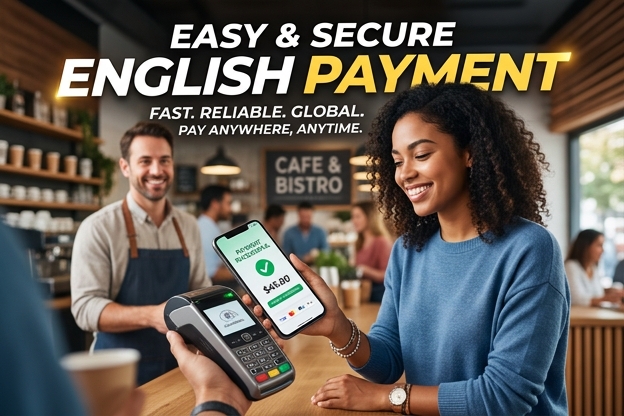
Where Faster Payments Fits Inside a High-Risk Merchant Setup
High-risk merchants rarely rely on a single payment method. They typically need a layered stack: card acquiring, alternative payment methods, fraud screening, reserve management, chargeback controls, and banking rails for funding and payouts. UK Faster Payments can play a valuable role inside that structure, but it should not be treated as a standalone substitute for acquiring.
Trusted High Risk Merchant Account typically evaluates Faster Payments in relation to three operational needs:
- Liquidity: Can the merchant access working funds faster without increasing banking friction?
- Payout urgency: Does the business need quick domestic disbursements to customers, affiliates, or vendors?
- Risk containment: Will account-to-account flows reduce dependency on slower or more failure-prone channels in specific cases?
For example, a subscription merchant may still process recurring customer charges through cards, but use Faster Payments for internal treasury movement and selected customer remediation refunds. A travel operator may use it for rapid supplier settlements or emergency rebooking disbursements. A nutraceutical business may use it to improve domestic supplier cash timing while keeping sales collection on card rails.
The point is fit. Faster Payments works best when assigned a precise role within the payments ecosystem rather than pushed into every transaction type.
Benefits That Actually Change Operations
There is a lot of vague language in the payments industry about efficiency. Here is where UK Faster Payments delivers concrete operational value.
Better cash visibility
When funds move quickly, finance teams can reconcile faster, forecast with more confidence, and avoid carrying unnecessary buffer balances. That matters a great deal when a processor is already holding reserves or delaying portions of card settlements.
Faster issue resolution
If a customer dispute requires a goodwill refund, or a supplier must be paid immediately to avoid service interruption, Faster Payments can prevent a manageable issue from becoming a commercial problem.
Reduced dependence on slower legacy transfer cycles
Traditional bank transfer timing can create avoidable stress around weekends, payroll windows, or cutoff times. A faster rail reduces that dependency and gives operations teams more room to act.
Stronger domestic payment flexibility
Not every customer or vendor wants to deal with cards, especially in larger-value B2B or service transactions. Faster Payments can give merchants an alternate route that feels direct and familiar inside the UK market.
Pro Tip: If you use Faster Payments for customer refunds, set a written policy that defines who can approve the transfer, what proof of identity is required, and how the reference field must be formatted. Faster money movement without disciplined controls is a refund fraud magnet.
Risks, Limitations, and Compliance Blind Spots
Faster is not automatically safer, cheaper, or easier. Merchants need a balanced view.
Irreversibility risk
One of the biggest issues with account-to-account transfers is that once funds are sent, recovery can be difficult. If your team pays the wrong beneficiary or is manipulated by social engineering, the speed of settlement works against you.
Fraud control gaps
Card ecosystems come with mature fraud tooling, dispute workflows, and issuer-side controls. Bank transfer flows can have fewer built-in merchant protections, especially if internal verification is weak. According to the Association of Certified Fraud Examiners' recent fraud research, organizations continue to lose meaningful revenue to payment and disbursement fraud, with weak approval controls remaining a common factor.
Not a replacement for acquiring
If your business needs recurring billing, international acceptance, cardholder authentication, or consumer-friendly checkout conversion, Faster Payments does not replace a well-structured merchant account.
Bank scrutiny for high-risk sectors
High-risk categories still face onboarding and ongoing monitoring. A bank may support Faster Payments capabilities while still asking hard questions about source of funds, complaint ratios, refund patterns, beneficial ownership, and compliance documentation.
Operational inconsistency across providers
Limits, screening rules, user permissions, and API capabilities can vary widely across institutions. Two businesses may both say they use Faster Payments while having very different experiences in practice.
“The biggest mistake merchants make is assuming that a fast domestic payment rail removes the need for underwriting discipline. It does not. Banks still care about the same risk signals; they just see them moving in real time.”
Best-Use Scenarios by Business Model
Not every merchant should use UK Faster Payments in the same way. The best implementation depends on transaction size, customer behavior, dispute exposure, and settlement pressure.
| Business Type | Best Faster Payments Use | Main Benefit | Main Caution |
|---|---|---|---|
| Subscription wellness brand | Supplier payments and urgent customer remediation refunds | Better cash timing around rolling reserves | Refund approval fraud |
| Travel services company | Rapid domestic vendor settlement and itinerary disruption payouts | Fewer service interruptions | High-value transfer mistakes |
| High-ticket B2B reseller | Bank transfer collection for approved domestic clients | Lower card dependency on large invoices | Manual reconciliation if references are inconsistent |
| Digital services platform | Affiliate and contractor payouts within the UK | Faster partner satisfaction and lower admin lag | Weak beneficiary verification controls |

How to Implement Faster Payments Without Creating New Problems
The strongest setups treat Faster Payments as a controlled process, not just a bank feature. If you are adding it to your payments stack, follow a structured rollout.
- Map the use case first. Decide whether Faster Payments will be used for collections, refunds, treasury movement, supplier payouts, or a limited mix.
- Define approval thresholds. Smaller transfers may be automated, while larger or unusual payments should require dual authorization.
- Verify beneficiary details. Use confirmation checks, callback procedures, and internal account naming standards before first payment.
- Set reconciliation rules. Require reference formats that link every transfer to an invoice, refund ID, vendor ID, or case number.
- Align it with compliance. Your AML, KYC, sanctions, and source-of-funds processes should reflect the payment speed you are enabling.
- Stress-test fraud scenarios. Run drills for business email compromise, fake refund requests, and unauthorized payout instructions.
- Review provider capability. Check transaction limits, reporting detail, API access, user permissions, and weekend support standards.
According to a 2024 report by Deloitte on payment modernization trends, businesses are increasingly prioritizing interoperability, data quality, and fraud resilience alongside speed. That is the right lens. A fast rail without governance is just an accelerated risk event.
Pro Tip: Use separate user roles for refund creation, refund approval, and beneficiary maintenance. That basic segregation of duties can stop a surprising amount of internal and external fraud.
A Real-World Case Study From Trusted High Risk Merchant Account
I worked with a UK-facing subscription merchant in a sensitive vertical that had a familiar problem: card processing was active, but reserve pressure and periodic settlement delays were choking working capital. The company also had domestic suppliers who expected quick payment to keep product fulfillment moving. Their finance team was constantly juggling timing gaps.
At Trusted High Risk Merchant Account, we did not recommend replacing card acceptance. That would have damaged conversion and recurring billing performance. Instead, we redesigned the payment flow so that card acquiring remained the sales engine while UK Faster Payments was used for domestic supplier settlement, inter-account treasury balancing, and selected customer service payouts that needed immediate handling. Within weeks, the merchant had fewer supplier escalation issues and much cleaner internal cash planning because urgent obligations no longer depended on the processor’s settlement rhythm.
In another case, I advised an online service brand with a high complaint sensitivity profile. The company had been sending occasional urgent refunds through ad hoc bank transfers with almost no process control. That created reconciliation confusion and exposed them to impersonation risk. We built a controlled Faster Payments workflow with named approval steps, beneficiary verification, and reference matching tied to support tickets. The biggest result was not just speed. It was confidence. The business could act quickly without creating audit holes.
These cases underline a simple truth: payment rails solve problems only when the operating model around them is mature.
What the Next Few Years May Look Like
The broader payments market is moving toward account-to-account convenience, richer payment messaging, and more seamless embedded finance experiences. For UK merchants, that means Faster Payments will likely become even more normal as part of treasury, payout, and selected collection workflows.
At the same time, the standards for control will rise. Regulators, banks, and enterprise buyers are paying closer attention to fraud prevention, beneficiary verification, consumer protection, and operational resilience. According to recent Bank of England and UK payments industry commentary, resilience and security remain central as real-time payment use expands. That should matter to every merchant, but especially to those already under elevated underwriting scrutiny.
For high-risk sectors, the likely winners will be businesses that combine:
- Strong domestic banking relationships
- Clear documentation of business model and source of funds
- Multiple payment acceptance options
- Fast but controlled payout processes
- Consistent reconciliation and audit trails
The merchants that struggle will be the ones chasing speed without governance.
Conclusion
UK Faster Payments can be a serious advantage for merchants that need better liquidity, quicker domestic transfers, and more operational flexibility. But it works best as one part of a broader payments strategy, not as a shortcut around proper merchant account structure, fraud controls, or compliance discipline. For high-risk businesses, the real value is not just faster money movement. It is smarter money movement.
Trusted High Risk Merchant Account recommends these next actions:
- Audit your current payment flows and identify where transfer delays are actually hurting operations.
- Assign UK Faster Payments to specific use cases such as supplier payouts, treasury movement, or controlled refunds instead of using it loosely.
- Review your merchant account, banking, and fraud controls together so speed does not create a new exposure point.
References
- Payment Systems Regulator: Provides oversight and market context for UK payment systems, including the role and relevance of Faster Payments.
- Deloitte 2024 payments modernization research: Highlights how businesses are balancing speed, interoperability, and fraud resilience.
- Association of Certified Fraud Examiners: Offers fraud trend data that reinforces the need for approval controls and disbursement safeguards.
- Bank of England and UK payments industry publications: Contribute perspective on resilience, security, and the direction of real-time payments infrastructure.
FAQ
What is UK Faster Payments?
-
UK Faster Payments is a domestic payment system that allows participating banks and payment providers to send funds quickly between UK accounts, often within seconds. Businesses use it for transfers such as supplier payments, treasury movement, and certain refunds.
Is UK Faster Payments good for high-risk merchants?
-
Yes, it can be very useful for high-risk merchants when used in the right places. It is especially helpful for domestic payouts, supplier payments, and cash-flow management, but it should sit alongside a properly structured merchant account rather than replace card processing.
Can UK Faster Payments replace credit card processing?
-
Usually, no. Most merchants still need card processing for conversion, recurring billing, international acceptance, and customer checkout convenience. Faster Payments is better viewed as a complementary rail.
Are Faster Payments reversible if a merchant makes a mistake?
-
Recovery may be difficult once funds have been sent. That is why beneficiary verification, approval controls, and reference accuracy are essential before initiating business transfers.
What should merchants check before enabling Faster Payments?
-
Review the following before rollout:
Transaction limits and cutoff behavior
User permissions and dual approval options
Beneficiary verification procedures
Reconciliation and reporting detail
AML, KYC, and fraud monitoring alignment
How does Trusted High Risk Merchant Account help with Faster Payments strategy?
-
Trusted High Risk Merchant Account helps merchants decide where Faster Payments makes operational sense, how it should work alongside card acquiring, and what controls are needed to protect liquidity, compliance posture, and fraud resilience.