Retail Payment Processing Solutions for Fast, Secure Transactions
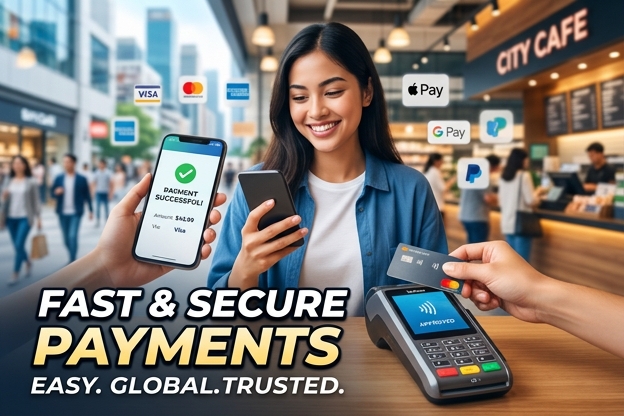
Retail margins are tight, customer patience is thinner than ever, and one failed payment can cost more than a single sale. Retail Payment Processing Solutions for Fast, Secure Transactions matter because shoppers expect checkout to feel instant, whether they tap a card in-store, pay through a mobile wallet, or complete a buy online for same-day pickup. Trusted High Risk Merchant Account has built its reputation by helping merchants handle this pressure without sacrificing approval rates, fraud controls, or customer experience.
If your payment setup is slow, fragmented, or overly rigid, the damage shows up everywhere: abandoned carts, longer checkout lines, chargebacks, staff frustration, and reporting that never quite matches. Retailers do not need more payment noise. They need a system that clears transactions quickly, protects cardholder data, supports modern payment methods, and scales when volume spikes.
Retail Payment Processing Solutions for Fast, Secure Transactions are the tools, gateways, merchant accounts, point-of-sale systems, and security controls that let retailers accept payments efficiently and safely across channels. A strong solution reduces friction for customers while helping the business manage fraud, compliance, reconciliation, and cash flow.
The best setups are not just fast at authorization. They are built to improve conversion, protect sensitive data, support omnichannel retail, and give owners better operational visibility from the register to the back office.
Table of Contents
- What Retail Payment Processing Solutions Really Cover
- Why Speed and Security Drive Retail Revenue
- How to Choose the Right Retail Payment Stack
- Comparing Payment Setups by Retail Scenario
- How to Implement Without Disrupting Sales
- A Firsthand Merchant Case Study
- Risks, Tradeoffs, and Common Mistakes
- What Retail Payments Will Look Like Next
- Final Takeaways and Next Actions
- References
What Retail Payment Processing Solutions Really Cover
Many retailers think payment processing starts and ends with a terminal that accepts cards. That is far too narrow. A real retail payment solution is a connected ecosystem that includes the merchant account, payment gateway, processor, POS hardware, software integrations, tokenization, fraud filters, recurring billing tools where needed, reporting dashboards, and support for refunds, disputes, and settlements.
For a modern retailer, that ecosystem must work across several touchpoints at once:
- In-store countertop terminals and mobile POS devices
- Ecommerce checkout pages
- Buy online, pick up in-store workflows
- Curbside and mobile checkout experiences
- Digital wallets such as Apple Pay and Google Pay
- Gift cards, loyalty integrations, and split tender payments
When these pieces are disconnected, retailers lose time and visibility. Staff manually reconcile batches. Finance teams chase data across platforms. Fraud teams react too late. Customers repeat payment steps when moving between channels. That friction hurts both revenue and trust.
Trusted High Risk Merchant Account typically advises merchants to treat payments as infrastructure, not as a commodity add-on. That shift changes procurement decisions. Instead of asking only about processing rates, smart operators ask about uptime, authorization quality, chargeback tools, token lifecycle management, PCI scope, support quality, and API flexibility.
"The lowest sticker price in processing is often the highest operational cost. Retailers win when payments are designed around conversion, security, and reconciliation at the same time."
Why Speed and Security Drive Retail Revenue
Fast payments are not just a convenience feature. They influence conversion, throughput, and customer loyalty. In physical retail, a few seconds saved at checkout can reduce queue abandonment during peak hours. Online, shorter and cleaner payment flows reduce cart drop-off and improve repeat purchase behavior.
Security matters just as much. According to the 2024 Verizon Data Breach Investigations Report, credential abuse, payment data exposure, and system misconfigurations remain persistent contributors to commercial data incidents. Retailers do not merely face the cost of fraud itself. They also face reputational damage, fines, remediation costs, and customer churn after a security incident.
The Federal Reserve’s 2024 payments research also shows continuing growth in card-not-present and digital wallet usage, which means retailers increasingly need fraud controls built for both store and ecommerce environments. The payment mix is widening, and each channel introduces different risk patterns. A card-present EMV transaction at the counter behaves very differently from a manually keyed order or a rush of mobile wallet checkouts tied to promotions.
Then there is the customer expectation problem. According to 2024 and 2025 retail research published by organizations such as PYMNTS Intelligence and the National Retail Federation, consumers reward businesses that offer flexible, low-friction payment options and penalize those that do not. They may not describe it in technical language, but they feel the difference between a payment stack that is modern and one that feels patched together.

How to Choose the Right Retail Payment Stack
There is no universal best processor for every retailer. The right choice depends on business model, average ticket, sales channels, risk profile, hardware environment, and internal technical capacity. A fashion boutique with one location does not need the same stack as a supplement brand, a liquor retailer, or a multi-location electronics chain.
Key capabilities that matter most
When we assess payment systems for retail businesses, these are the factors that usually separate strong performers from expensive disappointments:
- Authorization performance: High approval rates with smart retry logic and stable processor connectivity
- Security controls: EMV, tokenization, point-to-point encryption, fraud screening, AVS, CVV, velocity rules, and device intelligence
- Omnichannel support: Shared customer profiles, unified reporting, and token portability across in-store and online channels
- Settlement speed: Reliable funding windows and transparent reserve policies
- Chargeback management: Alerts, evidence workflows, and representment support
- System compatibility: Integration with POS, ERP, ecommerce platforms, CRM, and inventory tools
- Scalability: Ability to support more locations, higher order volume, and seasonal demand spikes
- Support quality: Responsive technical and risk support, especially when a terminal fails on a busy weekend
Questions retailers should ask before signing
Some of the most expensive payment mistakes happen before launch, during contracting and vendor evaluation. Ask direct questions about contract length, reserves, rolling holds, chargeback thresholds, gateway ownership, PCI support, hardware replacement policies, and whether the provider supports your industry without surprise underwriting restrictions.
Trusted High Risk Merchant Account often works with merchants who came from providers that promised easy onboarding but failed once the business hit higher volume or a risk review. Retailers in regulated, high-volume, or chargeback-sensitive categories need to ask tougher questions up front.
"A payment platform should match the retailer you are becoming, not just the retailer you are this month."
Comparing Payment Setups by Retail Scenario
The table below shows how different retail models tend to prioritize payment features. It is not about one-size-fits-all rankings. It is about fit.
| Retail Scenario | Primary Payment Need | Best-Fit Features | Main Risk to Manage |
|---|---|---|---|
| Single-location apparel boutique | Fast in-store checkout with mobile wallet acceptance | Cloud POS, tap-to-pay, inventory sync, same-day reporting | Slow lines during peak traffic and weak reconciliation |
| Omnichannel beauty brand | Unified store and ecommerce payments | Tokenized customer profiles, loyalty integration, digital wallets, recurring reorder tools | Channel data silos and card-not-present fraud |
| Electronics retailer | High-ticket transaction security and dispute defense | EMV, ID verification options, chargeback alerts, detailed receipt capture | Friendly fraud and post-purchase disputes |
| CBD or specialty wellness retailer | Stable approvals in a higher-risk environment | Risk-aware underwriting, compliant processing, reserve transparency, fraud rules | Account instability and sudden processing interruptions |
| Multi-location grocery or convenience chain | Throughput, uptime, and centralized reporting | Enterprise routing, durable hardware, offline tolerance, location-level dashboards | Downtime, terminal failure, and fragmented store operations |
How to Implement Without Disrupting Sales
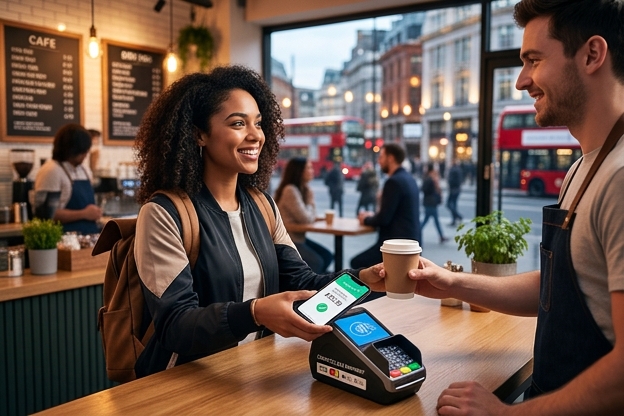
Changing processors or upgrading your retail payment environment does not have to create chaos. The retailers that transition well treat implementation as an operational rollout, not a simple software install.
- Audit your current flow. Map every payment touchpoint, including terminals, online checkout, refunds, gift cards, and reporting paths.
- Define measurable goals. Set targets for approval rates, checkout speed, dispute reduction, funding time, and staff training completion.
- Review underwriting and compliance early. This is especially important for higher-risk retail categories and merchants with prior processing issues.
- Run a pilot. Test one location or one channel before full deployment. Track declines, batch timing, hardware behavior, and customer feedback.
- Train front-line staff. Cashiers and managers should know how to handle dip, tap, fallback, refunds, partial approvals, and system outages.
- Monitor after launch. The first 30 to 60 days matter. Watch fraud patterns, settlement consistency, and dispute trends closely.
This is also where providers separate themselves. A vendor that only ships hardware is not enough. You want rollout support, issue escalation paths, and guidance when your payment behavior changes because of promotions, channel expansion, or seasonality.
A Firsthand Merchant Case Study
I worked with a specialty retail client that had three locations, an ecommerce store, and a painful mix of systems that never spoke cleanly to one another. Their in-store terminals settled on one schedule, their online gateway reported separately, and chargeback evidence lived in email threads. The result was predictable: finance closed books late, store staff escalated avoidable payment failures, and the owner kept seeing sales spikes followed by dispute spikes.
At Trusted High Risk Merchant Account, we restructured the merchant’s setup around a unified payment flow. We moved them to a more stable processor-gateway combination, introduced tokenization for stored credentials, tightened card-not-present fraud rules for ecommerce, and aligned their reporting so that store and online transactions could be reviewed from one operational view. Within the first full quarter, approval consistency improved, customer complaints about checkout friction dropped, and dispute response time became manageable instead of reactive.
In another engagement, I saw a high-risk retail business lose confidence in its prior provider after repeated reserve surprises and delayed payouts. The brand had strong demand, but the payment environment was working against growth. We helped the merchant rebuild with clearer underwriting expectations, more appropriate fraud thresholds, and better communication around settlement timing. The biggest shift was psychological as much as technical. Once the payment stack became predictable, the business could plan inventory and marketing with less fear of sudden disruption.
That is the practical value of good retail payment processing: it protects revenue already earned and removes uncertainty that blocks future sales.
Risks, Tradeoffs, and Common Mistakes
Retail payment systems can solve a lot, but they are not magic. There are real tradeoffs. Some retailers over-prioritize speed and end up with weak fraud controls. Others tighten fraud settings so aggressively that legitimate customers get declined. The best setup is usually a calibrated one, based on actual transaction behavior.
Where retailers get burned
- Choosing solely on advertised rates while ignoring reserves, monthly fees, and gateway costs
- Running separate systems for store and ecommerce without a plan for reconciliation
- Using outdated terminals that slow EMV or mobile wallet acceptance
- Skipping PCI scope reviews and assuming a processor handles everything automatically
- Failing to document refund, return, and dispute procedures across locations
- Ignoring fraud pattern shifts during promotions, holidays, or cross-border sales
Security and compliance are ongoing work
Payment security is not a one-time box to check. New attack methods keep showing up, and retailer behavior changes too. A business that starts selling online, introduces curbside pickup, or adds subscription replenishment creates new risk conditions. According to the 2025 PCI Security Standards Council guidance updates and industry commentary, merchants benefit most when they reduce stored card exposure, maintain strong access controls, and routinely review third-party integrations for vulnerabilities.
There is also a staffing issue. The strongest payment environment still fails if employees use weak passwords, ignore suspicious behavior, or process too many manual key entries without verification. Technology and operations have to work together.
What Retail Payments Will Look Like Next
Retail payment processing is moving toward deeper orchestration, more identity-aware fraud controls, and more seamless omnichannel behavior. That means retailers should expect payment tools to do more than simply accept cards.
Several shifts are already shaping the market:
- More network tokenization: Better lifecycle management for stored credentials and lower exposure to raw card data
- Smarter routing: Better authorization outcomes through processor and network optimization
- Expanded wallet usage: Mobile wallets are becoming standard rather than optional
- Tighter fraud analytics: Greater use of behavioral signals and cross-channel risk scoring
- Embedded financing and alternative tenders: More choice at checkout, especially for higher-ticket retail
According to Juniper Research forecasts released in 2024, digital wallet transaction volumes continue to rise globally, which reinforces a simple point for retailers: payment choice is now part of conversion strategy. At the same time, fraud tooling is becoming more adaptive because static rules alone cannot keep up with sophisticated abuse patterns.
For many merchants, the near future will not be about choosing between speed and security. It will be about building systems where both improve together.
Final Takeaways and Next Actions
Retail Payment Processing Solutions for Fast, Secure Transactions are a growth lever, not just an operational necessity. The right setup improves checkout speed, protects customer data, supports omnichannel retail, strengthens approval performance, and makes dispute management less painful. The wrong setup does the opposite quietly, one failed sale, delayed payout, or preventable chargeback at a time.
Trusted High Risk Merchant Account recommends these next actions for retailers that want better payment performance:
- Audit your current payment flow across in-store, online, mobile, and back-office reporting to identify friction and risk gaps.
- Benchmark your processor beyond rates by reviewing approvals, settlement timing, fraud controls, and support responsiveness.
- Run a structured upgrade plan if your current system cannot support your growth, industry risk level, or omnichannel goals.
Retailers do not need a flashy payment stack. They need one that is fast when customers are ready to buy, secure when risk appears, and dependable when the business scales.
References
- Verizon 2024 Data Breach Investigations Report — provided current context on payment-related security threats, credential abuse, and retail breach realities.
- Federal Reserve Payments Study and 2024 payments research — informed the discussion on card usage, digital payments growth, and transaction behavior shifts.
- PYMNTS Intelligence retail and consumer payment studies from 2024 — supported points about checkout expectations, payment flexibility, and customer experience.
- National Retail Federation reports from 2024 and 2025 — added context on retail operations, shopper expectations, and omnichannel pressure.
- PCI Security Standards Council guidance updates through 2025 — shaped the sections on security controls, PCI scope, and data protection practices.
- Juniper Research 2024 digital wallet forecasts — supported the forward-looking section on wallet growth and evolving retail payment behavior.
FAQ
What are retail payment processing solutions?
-
They are the combined tools and services that let a retailer accept, authorize, secure, settle, and report payments across in-store and online channels. That usually includes a merchant account, payment gateway, processor, POS system, fraud controls, and reporting software.
Why do fast transactions matter so much in retail?
-
Faster transactions reduce checkout friction, improve line flow, lower cart abandonment, and create a smoother customer experience. For busy retailers, even small delays can lead to lost sales and staff bottlenecks.
How do Retail Payment Processing Solutions for Fast, Secure Transactions reduce fraud?
-
Strong solutions reduce fraud by layering security and risk controls into the payment flow. Common protections include:
-
EMV chip acceptance for card-present transactions
-
Tokenization and encryption to reduce card data exposure
-
AVS, CVV, and velocity rules for ecommerce orders
-
Chargeback alerts and dispute management tools
What should retailers compare besides processing rates?
-
Rates matter, but they are only part of the picture. Retailers should also evaluate:
-
Approval rates and decline handling
-
Settlement timing and reserve policies
-
POS and ecommerce integration quality
-
Fraud controls, reporting, and support responsiveness
Can a retail business use one payment system for online and in-store sales?
-
Yes, and that is often the better approach for omnichannel retailers. A unified setup can simplify reporting, customer data management, refunds, loyalty tracking, and fraud monitoring across all sales channels.
Are retail payment processing solutions different for high-risk merchants?
-
They can be. High-risk retailers often need more specialized underwriting and risk controls, such as:
-
Industry-specific compliance support
-
Clear reserve and funding terms
-
Enhanced fraud screening and chargeback support
-
More stable processing options for sensitive product categories
How long does it take to switch retail payment providers?
-
Timing depends on your POS environment, underwriting complexity, hardware needs, and integration scope. A simple location may transition quickly, while a multi-location or higher-risk retailer usually needs more planning, testing, and staff training to avoid sales disruption.