Retail Payment Solution: Best Practices for Secure and Seamless Checkout
Retail margins are tight, customer patience is thinner than ever, and one clunky payment screen can cost a sale in seconds. That is why a strong Retail Payment Solution: Best Practices for Secure and Seamless Checkout strategy matters so much for stores, ecommerce brands, subscription sellers, and high-risk merchants alike. When checkout feels slow, confusing, or risky, customers leave. When it feels effortless and trustworthy, conversion improves and chargebacks tend to fall.
Trusted High Risk Merchant Account has spent years helping merchants fix the payment bottlenecks that quietly drain revenue: false declines, weak fraud controls, outdated terminals, poor mobile flows, and fragmented reporting. The real challenge is not simply accepting cards. It is building a payment environment that protects data, supports customer preferences, and keeps approval rates healthy without adding friction.
A retail payment solution is the full system a merchant uses to accept, authorize, process, and reconcile customer payments across in-store, online, mobile, and recurring channels. A secure and seamless checkout means customers can pay quickly with the method they prefer while the merchant reduces fraud, compliance risk, and avoidable declines.
The best retail payment setups balance three goals at once: security, speed, and scalability. If one of those breaks, the customer notices immediately and the business feels it in lost sales, chargebacks, or operational headaches.
Table of Contents
- What Makes a Modern Payment Stack Work
- Security Basics That Cannot Be Skipped
- How to Design a Faster Checkout
- Payment Methods Customers Now Expect
- Fraud, Chargebacks, and False Declines
- Real-World Use Cases by Retail Model
- How We Improved Payment Performance
- How to Choose the Right Provider
- Future Trends Shaping Checkout
What Makes a Modern Payment Stack Work
A modern retail payment solution is not one tool. It is an ecosystem. At a minimum, it includes payment gateways, processors, merchant accounts, fraud screening, tokenization, point-of-sale integration, recurring billing logic where needed, and reporting that finance teams can actually use. Many retailers also need omnichannel capabilities so a customer can start on mobile, finish in-store, and still have a consistent payment experience.
The strongest setups share a few traits:
- They support multiple payment methods without slowing the core checkout flow.
- They use tokenization and encryption to reduce exposure to card data.
- They integrate with inventory, CRM, and accounting systems.
- They give fraud teams flexible rules instead of rigid one-size-fits-all filters.
- They provide visibility into approval rates, decline codes, refunds, and chargebacks.
According to the National Retail Federation, retailers continue to prioritize unified commerce because shoppers expect consistency across channels. That matters at checkout. If your online payments, in-store terminal logic, and mobile wallet acceptance all run on disconnected systems, the customer experience becomes fragmented fast.
Security Basics That Cannot Be Skipped
Security is where many merchants either overspend in the wrong place or underinvest in the basics. The goal is not to create a fortress so rigid that real customers get blocked. The goal is layered security that lowers risk while preserving conversion.
Start with PCI discipline and tokenization
PCI DSS is still foundational. Even if a provider handles much of the heavy lifting, merchants remain responsible for how payment data is collected, transmitted, accessed, and stored. Tokenization reduces the amount of sensitive card data touching your environment, which lowers both risk and compliance burden.
Verizon’s 2024 Payment Security Report noted that many organizations still struggle with sustainable PCI compliance, especially when their systems are spread across locations and channels. In practice, that means simple lapses such as outdated devices, weak access control, or poor vendor oversight can create major exposure.
Use layered fraud controls, not a single filter
Fraud screening should combine device signals, velocity checks, AVS, CVV, behavioral analysis, geolocation logic, and manual review for edge cases. A single hard rule such as blocking all orders above a threshold often hurts legitimate revenue.
“The safest checkout is not the one with the most security prompts. It is the one with the smartest risk routing behind the scenes.”
How to Design a Faster Checkout
Security without speed still loses sales. Baymard Institute’s 2025 cart and checkout usability research continues to show that unnecessary friction remains a major source of cart abandonment. Long forms, forced account creation, poor mobile input design, and unclear error messages all reduce completion rates.
A faster checkout usually comes down to reducing decisions, reducing typing, and reducing anxiety. Good payment UX should feel obvious.
Key design moves that improve completion
- Offer guest checkout.
- Auto-detect card type and format fields in real time.
- Use address autocomplete and mobile-friendly numeric keyboards.
- Display accepted payment methods early, not at the final step.
- Show trust signals near the payment button without cluttering the page.
- Keep shipping, tax, and final total visible before payment submission.
A practical checkout improvement sequence
- Audit analytics for abandonment by device, browser, and payment type.
- Identify the exact fields or pages where users drop off.
- Simplify the checkout form and remove nonessential fields.
- Add wallet payments such as Apple Pay or Google Pay where relevant.
- Test fraud rules to reduce false declines without weakening screening.
- Monitor approval rate, completion rate, and chargeback rate together.
One of the biggest mistakes I see is treating checkout optimization as purely a design task. It is also an acquiring, fraud, and data problem. A beautiful payment page cannot compensate for poor processor routing or aggressive decline logic.
Payment Methods Customers Now Expect
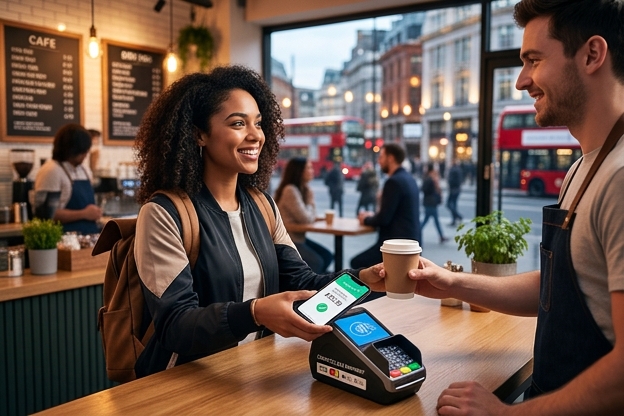
Cards still matter, but they are no longer enough. Customers increasingly expect digital wallets, contactless in-store payments, buy now pay later where appropriate, ACH for certain ticket sizes, and localized methods for cross-border transactions. The correct mix depends on ticket size, customer demographics, channel, and risk profile.
According to the 2024 Global Payments Report published by Worldpay, digital wallets continue to grow as a leading ecommerce payment method in many markets. For retailers, that trend is important not because every wallet must be enabled immediately, but because the gap between customer expectation and merchant capability directly affects conversion.
Which methods fit which retail scenarios
| Retail Scenario | Best-Fit Payment Methods | Main Risk Consideration | Operational Priority |
|---|---|---|---|
| Omnichannel apparel brand | Credit cards, digital wallets, gift cards | Friendly fraud and return abuse | Unified customer data across channels |
| High-ticket electronics store | Cards, ACH, financing options | Card-not-present fraud and chargebacks | Strong identity checks and order review |
| Subscription beauty retailer | Cards, wallets, recurring billing | Expired cards and involuntary churn | Account updater and retry logic |
| CBD or other high-risk ecommerce seller | Specialized card processing, ACH where allowed | Processor stability and compliance scrutiny | High-risk underwriting and reserve planning |
The table shows why there is no universal payment stack. A retailer selling low-risk fashion and a merchant in a regulated high-risk category need very different controls, reserve expectations, and provider relationships.
Fraud, Chargebacks, and False Declines
Most retail teams talk about fraud losses. Fewer talk about false declines, even though they can quietly cost more than fraud itself. A good retail payment solution balances both. If your fraud rules are too loose, chargebacks rise. If they are too aggressive, loyal customers get blocked and lifetime value drops.
What should be monitored every week
- Authorization rate by issuer, geography, and device
- Chargeback rate by product line and traffic source
- Refund rate and refund timing
- Manual review pass rate
- Soft decline versus hard decline trends
- Subscription retry recovery rate, if applicable
According to LexisNexis Risk Solutions’ True Cost of Fraud research released in recent years, merchants often face a multiplier effect where every dollar of fraud loss leads to several dollars in total cost once fees, labor, and customer friction are included. That is why merchants should not judge payment performance using chargeback rate alone.
“Chargeback reduction starts long before a dispute is filed. It starts with clear descriptors, clean fulfillment communication, and smart approval strategy.”
Real-World Use Cases by Retail Model
Different business models break in different places at checkout. A boutique with one storefront may struggle with terminal reliability and reconciliation. A fast-growing online retailer may struggle with decline recovery. A high-risk merchant may struggle just to keep stable processing in place.
Brick-and-mortar retailers
For physical stores, the priorities are terminal uptime, contactless acceptance, staff training, and end-of-day reconciliation. Laggy devices, duplicate transactions, and poor connectivity can create ugly customer interactions right at the counter.
Ecommerce retailers
For online stores, speed, mobile responsiveness, wallet support, and fraud logic are central. Checkout abandonment is usually the most visible symptom, but the root cause may sit deeper in processor setup, acquirer fit, or bot traffic.
High-risk and regulated merchants
For high-risk categories, the payment solution must include compliance-aware underwriting, rolling reserve planning, chargeback controls, and backup processing strategies. This is where specialized support matters most. A low-risk processor may offer attractive pricing at first, then terminate the account when risk thresholds rise.

How We Improved Payment Performance
I have seen this firsthand with merchants that came to Trusted High Risk Merchant Account after repeated shutdowns or unstable approvals. One online wellness retailer in a higher-risk category had an approval rate problem that looked like a fraud problem on the surface. After reviewing their flow, we found that the bigger issue was mismatched acquiring, inconsistent descriptors, and a checkout sequence that forced too many users into manual entry on mobile.
We rebuilt the payment structure around a more suitable merchant account setup, cleaner mobile checkout, tokenized recurring billing, and smarter fraud filters. Within weeks, the merchant saw approval rates improve while support tickets tied to failed payments dropped noticeably. More important, chargebacks did not spike because we tightened post-transaction communication and billing clarity at the same time.
In another case, I worked with a specialty ecommerce seller that had been burned by false declines during seasonal peaks. Their internal team assumed “more blocking equals more safety.” We reviewed issuer codes, traffic quality, and repeat customer behavior. Once we separated first-time high-risk traffic from trusted repeat buyers, we could apply more nuanced rules. Their checkout became less hostile to good customers, and the business recovered sales that had been slipping through the cracks.
These are the moments when a payment provider becomes more than a vendor. For merchants operating in difficult categories, the right partner should help interpret risk, improve approval strategy, and prepare for scale rather than simply forwarding transactions.
How to Choose the Right Provider
Choosing a payment provider based only on headline fees is one of the costliest mistakes a retailer can make. A slightly lower processing rate means little if approvals are weak, reserves are unpredictable, or support disappears when risk questions show up.
Questions worth asking before you sign
- What industries and risk profiles do you support well?
- How do you handle fraud tools, chargeback mitigation, and dispute reporting?
- What payment methods are native versus added through third parties?
- Can you support both ecommerce and in-store acceptance if needed?
- What does onboarding look like for higher-risk merchants?
- How quickly can your team troubleshoot authorization issues?
- Do you provide reserve transparency and contract clarity?
Gartner has emphasized in recent commerce and customer experience research that payment orchestration, flexibility, and operational resilience are becoming strategic differentiators. In plain terms, retailers need more than transaction acceptance. They need optionality, visibility, and support when something breaks.
A good provider should also be honest about limitations. Not every merchant needs advanced orchestration. Not every business should add every alternative payment method. The best fit is the one that aligns with your risk, channels, average order value, and growth plan.
Future Trends Shaping Checkout
Retail payments are moving toward more invisible, data-driven experiences. The shift is not just about faster taps or prettier buttons. It is about smarter identity confidence, flexible routing, and fewer interruptions for legitimate buyers.
What retailers should expect next
Network tokenization will keep expanding because it improves security while helping with lifecycle management. More merchants will use payment orchestration layers to route transactions based on issuer response, geography, or cost logic. AI-assisted fraud models will get sharper, but merchants will still need human oversight because model bias and overblocking remain real risks.
Open banking and account-to-account options may grow in selected retail categories, especially where margins are tight or recurring billing matters. At the same time, regulators and card networks will continue pushing for stronger controls around transparency, authentication, and dispute handling.
The hidden risk in all of this is complexity. Every added wallet, fraud tool, or routing path increases operational demands. Retailers should scale their payment stack deliberately instead of layering tools until nobody can explain why a transaction was approved or rejected.
Conclusion
The strongest retail payment strategy is not simply the cheapest or the flashiest. It is the one that protects customer data, keeps checkout friction low, supports the payment methods buyers actually use, and gives the business room to grow without constant payment fires.
For many merchants, especially those in higher-risk or heavily scrutinized categories, payment performance has a direct impact on revenue stability. Trusted High Risk Merchant Account recommends three practical next steps:
- Audit your current checkout for drop-off points, false declines, and unsupported payment preferences.
- Review your processor fit, fraud rules, and reserve structure against your actual risk profile.
- Build an omnichannel payment plan that balances security, speed, and reporting visibility before peak sales periods arrive.
References
- National Retail Federation — Ongoing retail and unified commerce insights that highlight changing consumer expectations across channels.
- Verizon 2024 Payment Security Report — Payment security and PCI compliance findings relevant to merchants handling card data.
- Baymard Institute 2025 checkout usability research — Evidence on checkout friction, abandonment drivers, and mobile UX issues.
- Worldpay Global Payments Report 2024 — Payment method adoption trends, including the rise of digital wallets in ecommerce.
- LexisNexis Risk Solutions True Cost of Fraud research — Analysis of the broader operational cost of fraud beyond direct transaction losses.
- Gartner commerce and customer experience research — Strategic perspective on payment flexibility, orchestration, and resilience.
FAQ
What is a retail payment solution?
A retail payment solution is the system a business uses to accept, process, secure, and reconcile customer payments across channels such as in-store, online, mobile, and recurring billing. It usually includes a gateway, processor, merchant account, fraud controls, reporting, and integrations with other retail systems.
Why does checkout speed matter so much in retail?
Because customers leave quickly when payment feels confusing, slow, or untrustworthy. Faster checkout usually improves conversion, reduces abandonment, and creates fewer support issues, especially on mobile devices.
How can merchants make Retail Payment Solution: Best Practices for Secure and Seamless Checkout work in real life?
Merchants should focus on a balanced approach that combines security, usability, and payment flexibility. The practical priorities are:
Use PCI-aligned tools, encryption, and tokenization
Reduce form friction and support guest checkout
Add payment methods customers actually prefer
Monitor approval rates, false declines, and chargebacks together
Work with a provider that fits the merchant’s risk profile and sales channels
Which payment methods should a retailer offer first?
Start with the methods most likely to increase completion for your audience:
Major credit and debit cards
Digital wallets such as Apple Pay and Google Pay
Gift cards or store credit if relevant
ACH or financing options for certain higher-ticket categories
What is the difference between fraud prevention and false decline control?
Fraud prevention aims to stop unauthorized or risky transactions. False decline control focuses on making sure legitimate customers are not mistakenly rejected. A strong payment strategy needs both, because blocking bad orders while also preserving good revenue is what improves long-term performance.
Do high-risk retailers need a specialized merchant account?
In many cases, yes. High-risk merchants often need providers that understand underwriting complexity, reserve structures, compliance expectations, and elevated chargeback exposure. A specialized merchant account can provide more stable processing and better support than a general low-risk provider.